
Met Mast Installation Services
Our experienced team ensures precise installation through thorough site assessments, robust engineering, and the use of high-quality materials. We handle every aspect of the installation process, from location analysis to sensor calibration, ensuring accurate and reliable data collection.
At GC Wind Services, we specialise in the installation of met masts for a variety of industries, including wind energy, weather forecasting, and environmental monitoring. With a focus on safety and efficiency, GC Wind Services is your trusted partner for met mast installations, no matter how challenging the site.
The installation process for met masts begins with a comprehensive site analysis. GC Wind Services conducts detailed assessments of the geographical location, wind patterns, and environmental factors to determine the most suitable site for the installation. The assessment considers local terrain, accessibility, potential risks, and the surrounding infrastructure to ensure the mast will function effectively over the long term.
For wind energy projects, accurately assessing local wind conditions is essential to predict energy production potential. Our team evaluates factors such as wind turbulence, seasonal variations, and height-based wind profiles to identify the optimal location for installation. We also perform soil analysis to determine the foundation requirements for the mast.
The site analysis not only determines the feasibility of the installation but also influences the design and material selection, ensuring that the mast will withstand local environmental conditions.
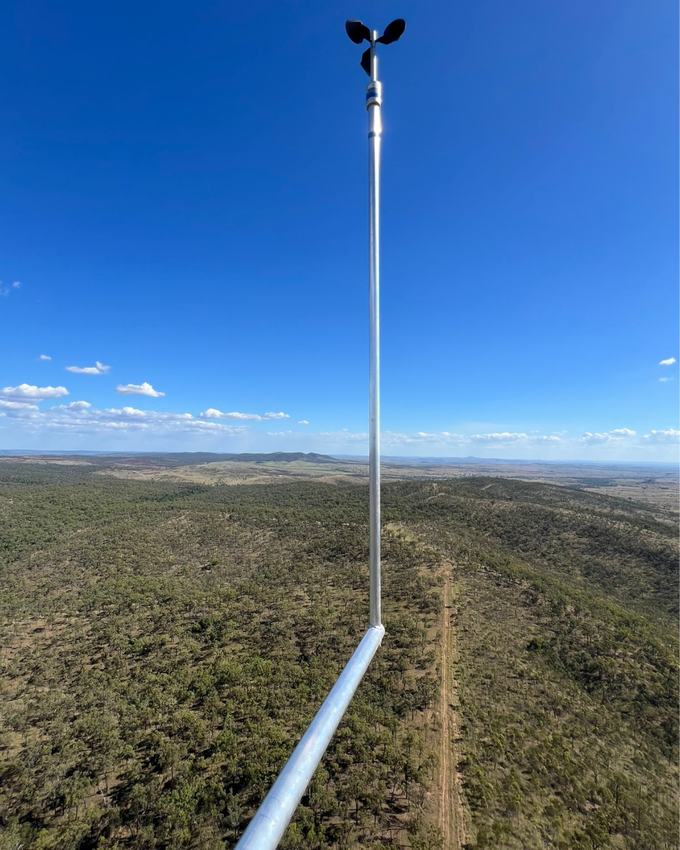
One of the key components of met mast engineering is the integration of measurement and data collection instruments. GC Wind Services specialises in selecting and installing high-precision sensors to capture essential atmospheric data. These instruments measure parameters such as wind speed, wind direction, temperature, humidity, and air pressure, typically at multiple heights along the mast to capture a vertical profile of atmospheric conditions.
To ensure the accuracy and reliability of the data, the sensors must be carefully calibrated and positioned. Our engineers at GC Wind Services ensure that all sensors are placed at the optimal locations on the mast and that they are shielded from interference or damage. This may include designing custom brackets or housings to protect the sensors while minimising their impact on data quality.
GC Wind Services is committed to ensuring that all our engineering projects meet or exceed the necessary regulatory and safety standards. Each met mast is built in compliance with local and international codes, such as the International Electrotechnical Commission (IEC) standards for meteorological equipment and the Occupational Safety and Health Administration (OSHA) regulations for worker safety.
Our team ensures that each mast’s design accounts for safety features, including lightning protection, fall arrest systems, and structural safeguards to prevent collapse during extreme weather conditions. We also conduct regular risk assessments to ensure that potential hazards are identified and mitigated during the design and installation phases.
The mast structure is designed with accessibility in mind, ensuring that maintenance crews can safely access the mast for inspections and repairs. The design may include safety ladders, handrails, and secure platforms to enable safe work practices throughout the mast’s lifespan.
Additionally, after successfully installing a meteorological mast (met mast), GC Wind Services ensure a thorough handover process to our clients. This includes providing a detailed handover report that outlines the installation specifics, system functionality, and any relevant observations made during the process. Additionally, we supply calibration certificates for all installed equipment, ensuring that all instruments are accurately calibrated and meet industry standards. This comprehensive documentation not only ensures that the system is ready for operation but also provides our clients with the assurance of reliable and precise data collection for their wind energy projects.

ABOUT OUR COMPANY
At GC Wind Services, we offer end to end wind monitoring solutions tailored to the renewable energy sector. Our advanced equipment and expert analysis ensure you have the accurate data needed for informed decision making and optimal project performance.
We understand that each project has unique requirements based on location, purpose, and environmental conditions. That’s why we offer customised met mast solutions tailored to meet the specific needs of our clients. Whether it’s adjusting the mast height to optimise data collection, selecting specific materials to enhance durability, or designing special mounting solutions for weather instruments, our engineering team ensures the final design aligns perfectly with the project goals.
Reliable Support. Smarter Maintenance.
GC Wind Supply is our trusted partner in asset maintenance, providing tailored solutions to keep your wind operations running smoothly. From parts supply to full service support, they bring practical know how and local reliability to every job.
Sertec Lightening Protector Preferred Supplier.

ENQUIRE NOW
With a proven track record across the country, GC Wind Services has supported major wind energy projects from start to finish.
29 |
400+ |
28 |
| In-Progress Sites | Projects Completed |
Business Partners |
|
|
Met Mast Decommissioning Methods Explained
Professional tower decommissioning requires careful method selection based on site conditions and environmental considerations. GC Wind Services employs two primary meteorological mast decommissioning techniques, each suited to different project requirements.
Cut & Drop Method The Cut & Drop method involves strategic sectioning of the tower structure, allowing controlled collapse within a predetermined fall zone. This anemometer tower decommissioning technique is effective for sites with adequate clearance and minimal surrounding infrastructure. Our met mast decommissioning contractors conduct precise fall zone calculations accounting for tower height, lean angle, and wind conditions, ensuring rapid execution whilst maintaining safety through comprehensive pre-planning and strategic guy wire management.
Gin Pole Method For sites with space constraints or sensitive infrastructure, the Gin Pole method provides controlled meteorological tower removal through section-by-section dismantling. This technique utilises a temporary lifting apparatus enabling controlled lowering of individual sections to ground level. Essential for wind tower decommissioning in constrained environments or where material recovery requires intact components, this method eliminates fall zone risks and enables precision dismantling in challenging locations.
Decommissioning Process and Safety Planning
Successful met mast decommissioning services begin with thorough planning and site assessment. Our met mast removal services commence with detailed site inspection including tower condition assessment, structural integrity evaluation, and hazard identification. We review installation documentation, assess foundation systems, and conduct environmental surveys to inform methodology selection.
All met tower decommissioning projects require comprehensive safety documentation including Safe Work Method Statements (SWMS), Job Safety Analysis (JSA), and site-specific risk assessments. Our professional tower decommissioning team secures necessary permits and ensures compliance with relevant Australian Standards. We establish secure exclusion zones with calculated fall zones, physical barriers, and access control measures, whilst coordinating with landowners, authorities, and environmental regulators.
Material Recovery and Site Restoration
Sustainable meteorological mast decommissioning prioritises material recovery and environmental responsibility. Met tower structures comprise high-grade galvanised steel offering excellent recyclability. Our met mast decommissioning services include systematic material sorting, with structural steel, guy wires, and hardware separated for recycling. Intact components are preserved for reuse, whilst we partner with certified recycling facilities to divert materials from landfill.
Foundation removal strategies include complete excavation, grinding below surface level, or capping for permanent burial. Our meteorological tower removal services provide site-specific foundation management addressing soil disturbance minimisation and landowner preferences.
Site restoration includes topsoil replacement, native species revegetation, and erosion control measures. Our wind tower decommissioning projects incorporate revegetation plans developed with environmental specialists, addressing climate, soil types, and surrounding ecosystems. Upon completion, clients receive comprehensive handover documentation including photographic records, waste disposal certificates, recycling documentation, and foundation treatment confirmation, providing evidence of regulatory compliance and environmental responsibility through our professional tower decommissioning service.

Met Mast Engineering Services
Our engineering expertise is at the heart of every met mast we design and install. We utilise advanced structural analysis techniques and high-strength materials to ensure the durability, stability, and reliability of each mast, even in the harshest environmental conditions.

Met Mast Installation Services
Our experienced team ensures precise installation through thorough site assessments, robust engineering, and the use of high-quality materials. We handle every aspect of the installation process, from location analysis to sensor calibration, ensuring accurate and reliable data collection.

Met Tower Maintenance Services
We provide regular inspections, sensor calibration, and structural assessments to keep your meteorological mast performing accurately. Our experienced team ensures all maintenance is backed by comprehensive safety documentation, maintaining the highest standards of reliability.

Met Mast Decommissioning Services
We specialise in sustainable decommissioning, focusing on recycling materials and restoring land to its natural state with minimal environmental impact. Our experienced team ensures that each project is backed by clear and comprehensive safety documentation, particularly to guarantee the safety and accuracy of the fall location during decommissioning.